
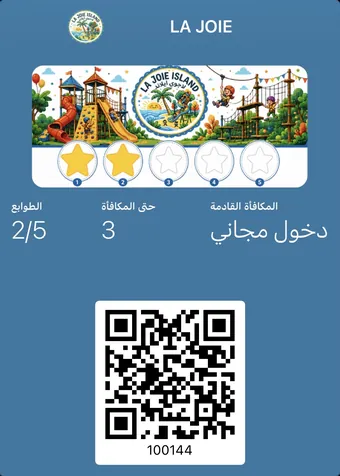
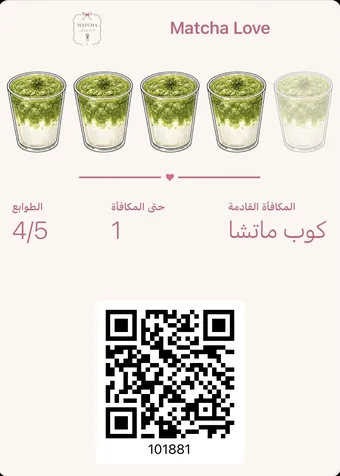
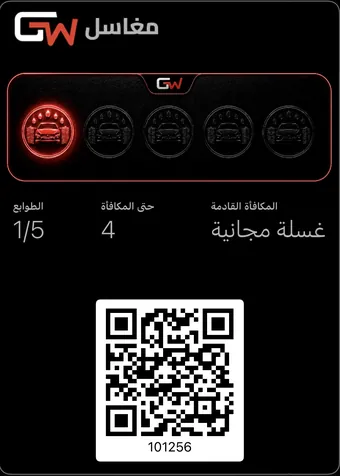
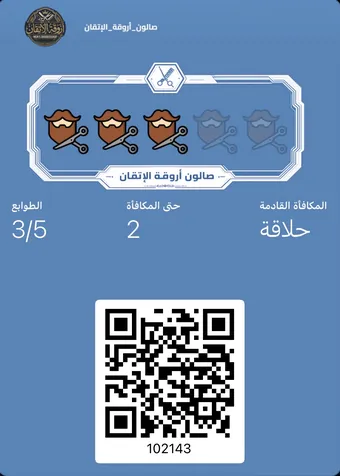
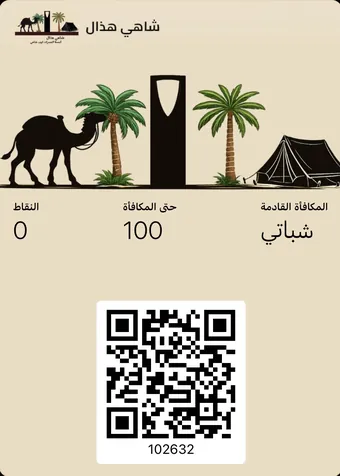
A digital loyalty card is a card added straight to Apple Wallet or Google Wallet on your customer’s phone. It collects stamps or points on every visit and updates itself automatically, with no app for them to install. The merchant creates it in minutes and shares it through a single QR code at the till.
Why did loyalty cards move from paper to the wallet?
The paper card did not fail because it was paper. It failed because it depended on the customer remembering to bring it. A card that lives in the wallet cannot be forgotten or lost, because the customer is not carrying it — their phone is. And once the card sits where they already pay, producing it stops being an extra step.
The second difference matters more: paper is silent. It cannot tell someone they are one stamp away, and it cannot call them back after a month of absence. A wallet card reaches the lock screen directly, and that is the only channel you own to your customer with no advertising middleman and no per-message cost.
- Reward
- A free speciality coffee
- Branch
- All branches
- Your logo and shop name The first thing a customer sees when the wallet opens. Keep it legible small — this space is never wider than a thumb.
- The progress strip Stamps or points collected. Seeing it one stamp short is the single strongest pull back through your door.
- The detail fields Reward, branch, balance, expiry. They appear on the back of the pass and update themselves after every visit.
- The redeem code The barcode your cashier scans. Your customer needs no app and no login to show it.
- The serial number Ties this pass to that one phone. It is what makes the card recoverable when they change device.
How does a loyalty card actually increase sales?
A card does not create a new customer. What it does is move three numbers you already own, and their product is your revenue: how often people visit, what they spend per visit, and what share of them come back. Improving each by a little produces more than it looks like, because the three multiply rather than add.
| Number | Before | After | Effect over a year |
|---|---|---|---|
| Visits per customer per month | 6 visits | 7 visits | +1,200 visits |
| Average ticket | 22 SAR | 24 SAR | +8.4% per visit |
| Share returning after a first visit | 30% | 40% | A third of new customers stay, not a quarter |
| Estimated annual revenue | 158,400 SAR | 201,600 SAR | +27% |
Those figures illustrate the mechanism rather than promise a result, but the direction is right and the logic is simple. What matters more is that the increase does not cost 27% of your revenue — it costs only the free items, which in a cafe runs about 5% of what the customer spends, as the worked example on the loyalty cards page shows.
- The second visit is the whole battle Someone who came once is barely a customer. The card gives them a specific reason to come a second time, and after that habit works in your favour at no further cost.
- The reward is spent with you, not somewhere else A discount reduces what you take today; an in-kind reward obliges another visit to collect it, and usually something else gets bought alongside.
- Getting close to the goal speeds people up Someone one stamp away visits sooner than usual to finish the card. That behaviour is well documented and repeatable, and it is why stamps work even with a modest reward.
- You finally know who your customers are Without a card they are all anonymous. With one you know who returns, when, and how much they spent — the first time you can decide on a number rather than an impression.
A loyalty card does not find you a new customer. It takes the one you already have and brings them back one extra time a month — and that extra time is the whole difference.
The rule everything below rests on
Five types of loyalty card, one for every kind of shop
The choice depends on the shape of your bill and your customer’s frequency, not on taste. The first two reward spend or attendance, the third is the familiar punch card, the fourth returns a percentage as credit, and the fifth is an exception tool used alongside another type rather than instead of one.
Points per riyal
One point for every riyal spent, with the point value set by you. It rewards how much a customer spends rather than merely that they showed up — someone spending 300 is not treated like someone spending 30.
Points per visit
Every visit earns the same points whatever the bill. Nothing to calculate and no amount to key in — one tap and it is done.
Buy 5, get the 6th free
The classic punch card without the paper: stamps that fill inside the customer’s wallet and a free item when the cycle completes. The cycle is adjustable from three stamps to nine, with five the default and the recommended setting.
Cashback
A percentage of each bill returns as credit spendable with you. You set the rate, a minimum purchase and a ceiling, so the customer calculates nothing and you never lose control of the cost.
Manual award
Grant points yourself whenever you decide: an apology for a mistake, an occasion, or a one-off gesture for a particular customer. Full control with no standing rule.
Notifications: the only channel to your customer that you own
This is the most important feature in the whole subject and the most neglected. Text messages cost money per message, social posts reach a fraction of your followers, and email gets ignored. A wallet notification reaches your customer’s phone with no advertising middleman and no per-message cost, because they consented to it when they added the card.
Three ways to choose who receives it
Do not send everything to everyone. Correct targeting is the difference between a notification that produces a visit and one that produces a deleted card.
- All customers — for big announcements and new rewards
- Inactive customers — you set the window: 30, 60 or 90 days
- A single customer — from their profile, for an occasion or an apology
Ready templates or your own text
Pre-written templates for the recurring cases, or write your own when the occasion is specific to your shop.
- Promotions
- Birthdays
- National day and seasons
- A fully custom message
One a week is a ceiling, not a target
Overdoing it pushes customers to delete the card, and deleting it means losing them entirely, because you have no other way to reach them. The best moments are the quiet hours of the week, not its peak.
A paper card is silent. This one speaks.
When one stamp is left, or a customer has been away a month, the message lands on their lock screen — no per-message SMS bill, no ad platform in the middle.
- No messaging cost
- No app for the customer
- Read before the phone is unlocked
Staff: who gives the stamps and who sees the numbers
You do not have to be the one issuing every stamp. You can add staff, each with their own login and their own activity log — and crucially the permissions are not ready-made roles like "cashier" or "manager" but five independent switches, so you enable exactly what each person needs.
| Permission | Lets the employee | When to grant it |
|---|---|---|
| Add points or stamps | Record points for customer purchases | To anyone standing at the till |
| Redeem rewards | Hand over the reward and close the cycle | To whoever you trust to judge at handover |
| View customers | Browse the customer list and profiles | To whoever handles customer service |
| View analytics | See the analytics dashboard | To a branch manager, not every employee |
| Edit card settings | Change the reward and card settings | Rarely — this one is dangerous |
-
Joining by code, not by invitation
Switch on "accept staff" and a code in the form
NQT-XXXXXXappears; the employee signs up with it, then waits for your approval before they can do anything. - Restrict to a card or a branch An employee can be limited to specific cards or a single branch instead of full access.
- Suspend temporarily or revoke permanently Suspension is for a holiday or while you check something and can be undone; revoking is for someone who has left and cannot.
- Only the account owner manages staff Employees never see that screen at all, whatever permissions they hold.
How many active staff you can have varies with your subscription; the full detail is on Niqati’s customer loyalty program.
Branches: one programme, several locations
If you run more than one location you can split a single account across your branches: each gets its own name, link, QR code and independent slice of the analytics — while customers and cards stay in one unified account, so someone who collected stamps at one branch redeems them at another without trouble.
Its own QR code and analytics
You learn which branch brings in more customers and which redeems more rewards, instead of one aggregate figure that tells you nothing you can act on.
One customer across every branch
One balance and one card in their wallet. They do not re-register at each location and do not lose stamps by visiting another.
Nothing changes until you create a branch
Create none and your account stays exactly as it is; the branches section only appears in settings when you actually need it.
Analytics: what you can see after a month of running it
A paper card tells you nothing. After a single month of a digital one you have something to read: how many customers joined, how many actually came back, how many cards completed and were redeemed, and who has not visited in a while. These are the numbers that turn the programme from a feeling into a decision.
- Customer growth How many cards were added this week, and whether the number is climbing or flat — the first sign of whether your team is offering the card at all.
- Engagement How many are active versus how many joined and vanished. The gap between those two tells you whether your reward is too distant or simply not tempting.
- Redemption The number of completed cycles, the one figure that proves the programme produced repeat visits rather than just sign-ups.
- Who drifted away The list of people who have not visited in a while, which is the source for the win-back campaign you send through "inactive customers" targeting.
How to build yours in five steps
-
Pick the card type
-
Set the reward and the stamp count
-
Design the face of the card
-
Print the QR code and put it by the till
-
Give the first stamp while they watch
From Saudi Arabia to the Gulf, then anywhere
Buying habits differ between these markets more than most merchants expect: how large a bill is, how often a customer comes back, and which seasons lift sales without warning. So each country gets its own page here, with its own worked example rather than one market’s number borrowed for another.
Quick answers before you start
Does my customer need to install an app?
No. They point their phone camera at a QR code, the card page opens, and they tap "Add to Wallet". The app is for the merchant only, to manage cards and give stamps.
What if my customer changes phone?
Wallet cards usually move with the device backup. If one does not, scanning the QR code again restores the card with its balance intact, because the balance lives in your records rather than on the phone.
How many stamps should I pick?
The number comes from how often your customer visits, not from taste. If they come eight times a month, a six-stamp card completes roughly every three weeks, which keeps them interested. Try your figure in the stamp goal calculator.
How do I stop stamp fraud?
Stamps are issued from the merchant’s device, never the customer’s, and each one is logged with its timestamp. A customer cannot award themselves anything, and you can see who gave what and when.
Does the card work in Arabic?
Yes, and it renders right-to-left in the wallet with your Arabic names exactly as you type them. The phone shows the card in its own system language, so an Arabic-speaking customer sees an Arabic card.