
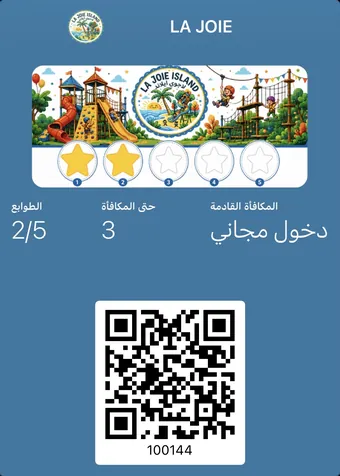
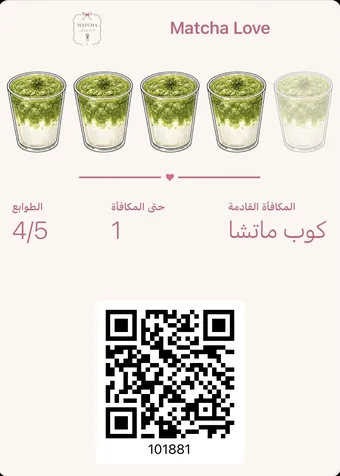
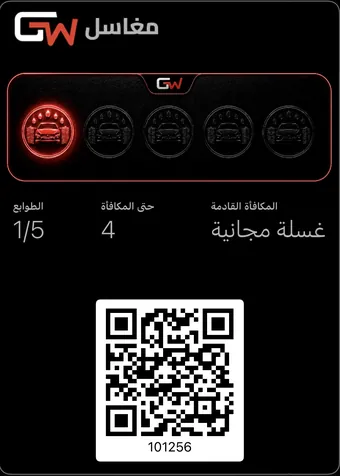
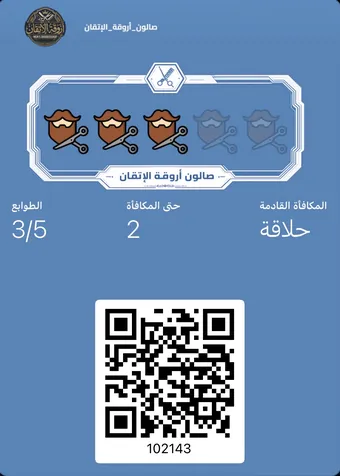
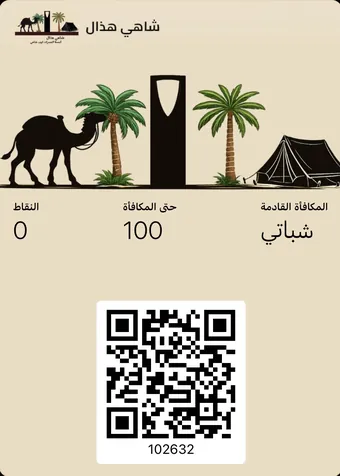
A restaurant loyalty card works on visit frequency, not discounts: the guest collects visits or points and redeems them for an item from your menu. The right reward is a high-margin dish you choose, never money off the bill, because a dish costs you its cost while a discount costs you its full value.
Why should the reward not be a discount?
Twenty riyals off costs you twenty riyals. A dessert priced at twenty riyals that costs you six costs you six. The guest sees the same number in both cases, and in the second you pay a third of it. This is the one rule that, kept alone, will stop your programme losing money.
| Reward | Value to the guest | Cost to you | Verdict |
|---|---|---|---|
| 20 SAR off the bill | 20 SAR | 20 SAR | Worst — full cost |
| A free main course | 55 SAR | ≈ 19 SAR | Generous, possibly too heavy |
| A dessert or a starter | 22 SAR | ≈ 6 SAR | Best for most restaurants |
| A drink with any order | 14 SAR | ≈ 3 SAR | Excellent for lifting frequency |
Note that the dessert gives the guest a sense of 22 riyals of value at a cost of six, and on top of that it pulls a main course along with it. A reward that needs another purchase beside it is the smartest reward you can pick.
How many visits before the reward in a restaurant?
A restaurant is not a cafe: a guest visits a cafe eight times a month and may visit a restaurant twice. Ask for ten visits and five months pass before the first reward, which is longer than any loyalty programme’s memory. The working rule is to pick a number that completes within six to ten weeks.
| Guest visits | Suggested count | Completes in |
|---|---|---|
| Weekly | 6 visits | 6 weeks |
| Twice a month | 4 visits | 8 weeks |
| Monthly | 3 visits | 12 weeks |
| More than twice weekly | 8 visits | 4 weeks |
A discount buys one visit at a lower price. A reward buys the next visit at the cost of the plate, not its price.
The difference that decides your margin
Mistakes that burn a restaurant programme
- Complicated minimums "Valid on bills over 150 riyals excluding weekends" is a condition nobody remembers, and it turns the reward moment into an argument at the till.
- Stamping the order instead of the visit A guest ordering for three people earns one stamp, not three, or the card completes in two visits.
- Forgetting delivery orders If half your sales come through apps, decide clearly: either delivery earns stamps too, or the card is dine-in only. Ambiguity here produces complaints.
- Not telling the floor team A programme the waiter does not know about is never offered, and a card that is never offered is a card nobody knows exists.
Frequently asked questions
Does a loyalty card suit fast food?
Fast food is among the best fits, because frequency is high and bills are consistent — exactly the case where stamps outperform points.
Should delivery orders earn stamps?
Your call, but make it explicit and print it on the card. Most restaurants restrict the card to real visits, because its purpose is to bring the guest back into the dining room rather than to grow app orders.
How do I launch it with the floor team?
One sentence the waiter says with the bill is enough, plus a five-minute briefing at the morning meeting. Put a QR code on the table too, so guests can add it while they wait.