
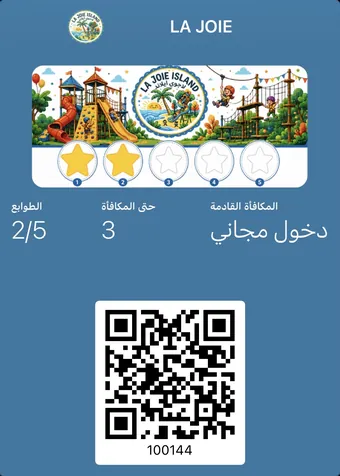
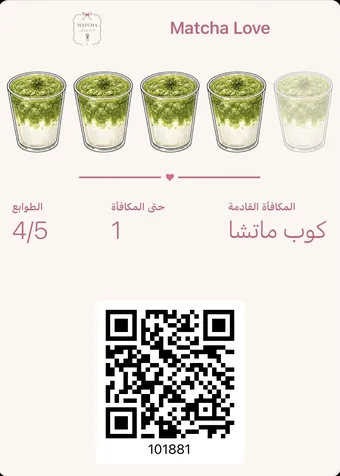
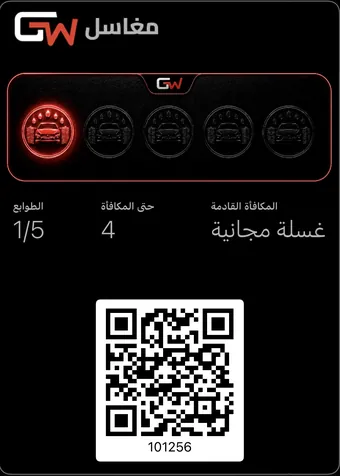
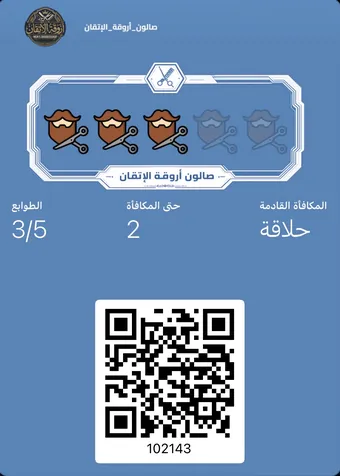
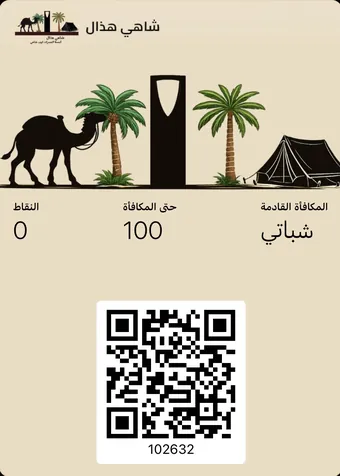
A loyalty card rewards a customer for buying repeatedly from the same shop: they collect stamps or points on each visit and exchange them for an agreed reward. Its purpose is not a discount. It is to give the customer a reason for their next visit to be to you rather than to the shop next door.
What is the difference between a loyalty card and a discount?
A discount is spent once and forgotten, and every customer takes it — including the ones who would have paid full price. A loyalty card defers the reward until after several visits, so only the customer who actually came back ever collects it. The financial difference is not the percentage; it is who benefits. Discounts reward everyone, cards reward returners.
That is why comparing "20% off" with "buy five, get the sixth free" is misleading even though the headline percentages look similar. With the first you pay 20% on every bill from day one. With the second you pay nothing until the sixth bill, and when you do pay, you pay the cost of an item rather than its price.
How does a loyalty card work, step by step?
- The customer points their ordinary phone camera at a QR code by the till.
- The card page opens in the browser and they tap "Add to Apple Wallet" or "Google Wallet".
- The card settles into their wallet beside their bank cards, with a balance of zero.
- On each purchase the cashier issues a stamp from the merchant app, and the number on their phone updates within seconds.
- When the row fills, a notification reaches their lock screen and they redeem on the next visit.
- Reward
- A free speciality coffee
- Branch
- All branches
- Your logo and shop name The first thing a customer sees when the wallet opens. Keep it legible small — this space is never wider than a thumb.
- The progress strip Stamps or points collected. Seeing it one stamp short is the single strongest pull back through your door.
- The detail fields Reward, branch, balance, expiry. They appear on the back of the pass and update themselves after every visit.
- The redeem code The barcode your cashier scans. Your customer needs no app and no login to show it.
- The serial number Ties this pass to that one phone. It is what makes the card recoverable when they change device.
What does a loyalty card actually cost you?
This is where most merchants get it wrong: they price the reward at its menu price when it only costs them what the item costs. Take a mid-range cafe with a 22 riyal average ticket and a cup costing 30% of its price:
| Line | Calculation | Result |
|---|---|---|
| Customer spend before the reward | 6 × 22 SAR | 132 SAR |
| Reward value as the customer sees it | One 22 SAR cup | 22 SAR |
| Headline give-back | 22 ÷ 132 | 16.7% |
| What the free cup actually costs you | 30% × 22 SAR | 6.6 SAR |
| Your true cost rate | 6.6 ÷ 132 | 5% |
The customer feels they received 16.7%; you paid 5%. That gap between perception and cost is the entire idea, and it is also why an in-kind reward beats a cash one: a riyal costs you a riyal, a cup costs you a third of one.
Which type of loyalty card suits your shop?
Points per riyal
One point for every riyal spent, with the point value set by you. It rewards how much a customer spends rather than merely that they showed up — someone spending 300 is not treated like someone spending 30.
Points per visit
Every visit earns the same points whatever the bill. Nothing to calculate and no amount to key in — one tap and it is done.
Buy 5, get the 6th free
The classic punch card without the paper: stamps that fill inside the customer’s wallet and a free item when the cycle completes. The cycle is adjustable from three stamps to nine, with five the default and the recommended setting.
Cashback
A percentage of each bill returns as credit spendable with you. You set the rate, a minimum purchase and a ceiling, so the customer calculates nothing and you never lose control of the cost.
Manual award
Grant points yourself whenever you decide: an apology for a mistake, an occasion, or a one-off gesture for a particular customer. Full control with no standing rule.
Why is paper no longer an option?
- Loss A large share of paper cards never come back after the first visit, and every lost card is a customer who left the programme without you ever knowing.
- Silence Paper cannot remind a customer they are one stamp away, and it cannot call them back after two months of absence.
- Blindness Paper will not tell you how many active customers you have, how many cards completed, or which weekday earns the most stamps.
- Forgery A rubber stamp can be bought twice; a digital stamp is issued from your account and logged with its time.
The single thing paper wins on is the visible cost of starting, and that is a deceptive figure. The full arithmetic is in the paper versus digital comparison.
Frequently asked questions
What is a loyalty card, briefly?
A card that rewards a customer for buying from your shop repeatedly, by collecting stamps or points that convert into a reward. In digital form that card lives in the phone wallet instead of a pocket.
Does a loyalty card suit a small shop?
A small shop is the best place for one, because its relationship with customers is already personal and the card turns that relationship into a habit. It needs no till integration and no technical team.
How long before it shows a result?
The first signal appears when the first batch of cards completes — the stamp count multiplied by the average gap between visits. For a cafe on six stamps with a twice-weekly customer, that is about a month.
How does it differ from a full customer management system?
A loyalty card is one tool focused on repeat visits; broader systems add branches, staff and campaign management. If you want the broader thing, look at Niqati’s customer loyalty program.